Roger Frey
The Day of the JackalRoger Frey is the Interior Minister who converts the threat against Charles de Gaulle into a secret, nationwide investigation. Confronted with a professional assassin whom France’s security files and OAS informants cannot identify, he recognizes both the limits of ordinary intelligence and the political danger of the President’s death. His decisive response is to keep the inquiry out of public view while placing Claude Lebel in charge of an unusually broad mobilization of police resources.
Office and Political Perspective
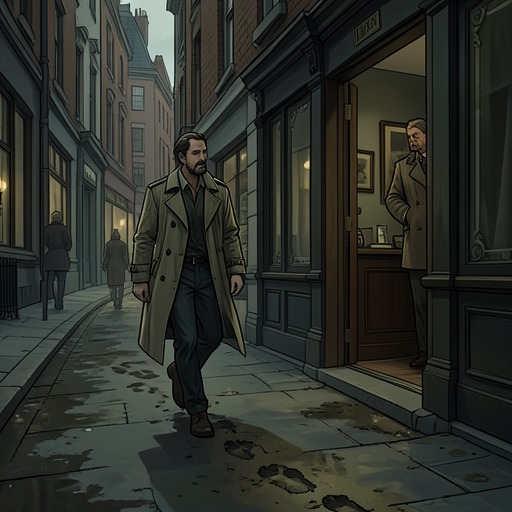
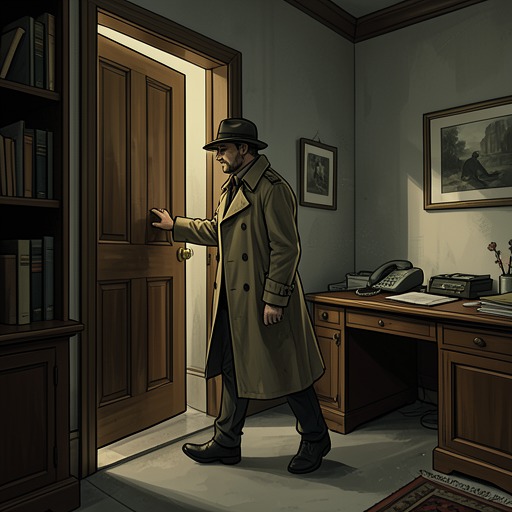
Frey first appears at his desk, looking through the ministry’s gates toward the traffic moving across Place Beauvau. The policeman directing the streams of vehicles seems to him to possess an enviably orderly task: the officer can impose a pattern on dangerous movement with calm authority. Frey also envies the two armed gendarmes at the gates, whose protected positions and uncomplicated careers contrast with the burdens of his own office. The scene establishes a minister who feels the weight of decisions that cannot be made routine merely by exercising authority.
That burden is sharpened by the report before him. After Commissaire Jean Ducret assesses the danger, Frey asks what he thinks; Ducret concludes that, if Colonel Rolland’s account is true, the plan is exceptionally dangerous. The assassin is a foreigner, working alone and without the contacts that France’s extensive network of agents and informants might ordinarily expose. The archives and infiltrators directed against the OAS are therefore of little use. Frey must reckon with an adversary who falls outside the categories on which the state has built its defenses.
Frey’s response also reflects his understanding of France’s fragile political situation. The Gaullists have survived earlier struggles for power, and, as he sees it, the conflict with the Army has not yet fully subsided. A successful assassination would not be an isolated loss: Frey fears that the death of the President could lead to a coup and civil war. The threat is thus at once personal, institutional, and national; preventing it is inseparable from preserving the political order.
Warning the President
Having concluded that the danger cannot be left unreported, Frey decides to seek an interview with de Gaulle that afternoon. In their meeting, he explains the situation briefly, mindful that the President dislikes long-winded private explanations. De Gaulle’s posture stiffens as he listens, while Frey continues with the concise account the urgency requires. The scene makes Frey the bearer of alarming news, but also shows him adapting his presentation to the temperament of the person whose safety is at stake.
The report offers little reassurance. The assassin’s anonymity has outflanked the agents placed inside the OAS, while the Interior Ministry’s dossiers cannot compensate for the fact that the suspect is foreign. Frey does not treat that failure as a reason to abandon action. Instead, he draws a distinction essential to the operation: the authorities are not forbidden to act, but they must not act publicly. He directs that a secret inquiry identify the assassin, trace him wherever he may be, in France or abroad, and stop him without hesitation.
Lebel and the Secret Inquiry
Frey gives this task to Lebel as a directive, not a request for advice. After Lebel has read Rolland’s report, the Minister briefs him and grants him a dedicated office, access to necessary information, and the resources of the organizations represented around the conference table. No limit is placed on the costs. The scale of the assignment matches Frey’s judgment that ordinary channels have been rendered ineffective by a lone foreign professional.
Lebel immediately turns the mandate into practical arrangements. He orders his assistant, Lucien Caron, to become his combined secretary and aide, to keep the inquiry’s existence secret from other staff, and to equip the office for continuous work with a camp bed, washing supplies, and a coffee percolator. He also requires ten outside telephone lines and a permanently available operator. Frey’s grant of authority is therefore not abstract: it enables a small, confidential command post to work across departments without the delays of ordinary administrative procedure.
The investigation reaches beyond France through discreet calls to foreign police chiefs. Lebel explains that the request is not yet an official inquiry between police forces: the authorities do not know whether the assassin has completed preparations or even formed a final intent. What they have is a poor description and no name. He asks other countries to search for a political contract killer with successful assassinations behind him. This uncertainty makes the international effort necessary, while the secrecy Frey has imposed governs how it can be conducted.
Oversight, Secrecy, and Judgment
At progress meetings, Frey presides while department heads report on the inquiry. Measures include checking the passports and luggage of tall blond male foreigners entering France, with the DST examining possible forgeries. The searches are presented to the public as routine spot checks, concealing their actual focus. A proposal to seize one of the three OAS leaders in Rome is set aside for diplomatic reasons; the President also opposes it. Frey’s response to the plot is consequently constrained not only by the need to find the assassin but by the danger that an overt or diplomatically reckless move could expose the operation.
When others infer that the assassin must have been warned and will abandon the attempt, Lebel cautions that exposure of the plot does not reveal the man’s name or prevent him from using false papers and disguises. Frey takes the warning seriously. He invites Lebel to give his account and publicly recognizes that Lebel, rather than the assembled department heads, is leading the inquiry. The acknowledgment reinforces the authority granted earlier and counters the temptation to confuse a disclosed threat with a neutralized one.
Frey also asks for the current position of the inquiries and accepts Lebel’s report that foreign police forces are sending dossiers and photographs while trying to locate possible suspects. When questions arise about whether these contacts risk public exposure, Frey states that he authorized the discreet inquiries after consulting the President. He closes the meeting and expects the departments to continue assisting Lebel. His role is not to solve the identification problem himself, but to preserve the investigation’s secrecy, sustain cooperation, and prevent premature confidence from displacing the search.